In Bangladesh, education has the power to change lives, help communities and help the country grow. In the past few years, the country has improved a lot to improving its education system. However, despite this progress, many challenges still remain. Education is very important for achieving SDG-4, which calls for universal access to quality education. This action is necessary not only to improve people’s lives but also to create a better and prosperous society through SDGs Schools in Bangladesh.

Goal 4 of the SDGs aims to promote inclusive, equitable, quality education and lifelong learning. This goal is the base of sustainable development, and education is key to all other areas of development. There are some points:
• Primary and secondary education provide free and good quality education for all.
• Equal access to technical, vocational and higher education.
• Improve work and entrepreneurship skills for youth and adults.
• Achieve universal literacy and numeracy skills at all ages.
Education is seen as very important to end poverty, reduce gender inequality and help the economic growth. Bangladesh has made great progress in achieving SDG 4, In particular with secondary school enrollment rates. Gender equality has grown, providing equal access to education for female students.
Bangladesh's National Education Policy is aligned with Goal-4 of the Sustainable Development Goals (SDGs), which highlights education as a fundamental right. Education remains a top priority in the government's efforts, supported by clear objectives and well-planned development measures.
Bangladesh still faces several challenges in achieving Sustainable Development Goal 4. Access to quality education remains very poor, particularly in rural areas and overcrowded schools. High dropout rates continue to be a big problem, especially at the secondary level, where many students’ dropout due to a lack of facilities.
Gender inequality persists due to cultural norms and child marriages that stop girls from going to school. Rural girls struggle to continue their education, and skills are often undervalued. Many students in rural and remote areas do not have the tools to learn online, which makes the learning process even more difficult. Unless this problem is addressed, rural students cannot keep up with their peers.
Despite participating in government teacher training programs, teachers in rural and remote areas lack adequate teaching and learning skills. Many teachers are not trained to teach well, making it difficult for students to learn in the classroom.
Bangladeshi government plays a crucial role in addressing the education challenges faced by the country. One of the most notable steps has been the introduction of free primary education, which has significantly increased enrollment in schools. Additionally, government has invested in school infrastructure and made improvements to basic facilities like sanitation, water supply, and classroom space. Improve the quality of education further by prioritizing teacher training programs.
In response to the digital divide, Digital Bangladesh Initiative aims to integrate technology into classrooms, providing students with access to digital education resources. Efforts to train teachers are also ongoing, with the government implementing programs to upgrade the skills of educators across the country.
The National Education Policy 2010 outlines the country’s commitment to SDG 4 and focuses on inclusivity, providing equal opportunities for all children to access education. The government has also introduced initiatives like scholarships for disadvantaged children and the distribution of school textbooks, further strengthening its commitment to making education accessible.

Technological innovations are rapidly changing the educational landscape in Bangladesh. E-learning platforms, such as Shikkhok Batayon and 10 Minute School, are bridging the gap between urban and rural students, offering online learning resources that are accessible via smartphones and computers.
Vocational Education and Training (TVET) are gaining importance, particularly through initiatives like the Skills for Employment Investment Program (SEIP). By providing students with practical skills that align with labor market demands, these programs are helping reduce the skills gap and improve employability, which supports SDG 4.4.
Moreover, efforts to provide Inclusive Education are growing. Schools are becoming more inclusive for children with disabilities, with initiatives like specialized schools and inclusive classrooms aiming to integrate these children into mainstream education.
Education has a ripple effect on other SDGs. Poverty (SDG 1) is directly impacted by education, as educated individuals are better equipped to escape the poverty cycle. Gender Equality (SDG 5) also benefits from education, as educating girls leads to better economic, social, and health outcomes for families and communities.
Health (SDG 3) is improved through education, as informed individuals make better health decisions, leading to improved public health. Finally, economic growth (SDG 8) is driven by a skilled, educated workforce, which is central to Bangladesh’s economic development.
At Japan International Dream School & College (JIDSC), we are dedicated to creating learning environment that values both academic success but the well-being of every student and teacher. Through a series of innovative facilities and practices, we contribute significantly to achieving the United Nations Sustainable Development Goals (SDGs).
As one of the best schools in Bangladesh, JIDSC has consistently provided an education that empowers students to thrive and succeed. We focus on giving students a well-rounded education that prepares them for future challenges and opportunities, making us a leader in the education field.
Our school’s infrastructure and educational programs directly align with SDG 4, which focuses on providing inclusive, equitable, and quality education for all. Through our focus on co-education, inclusive facilities, and SDG awareness programs, we ensure that every student has the opportunity to thrive.
As the best college in Bangladesh for those pursuing both academic excellence and personal development, we offer a variety of programs to meet our students’ diverse needs. We ensure every student is prepared to succeed in a globalized world.
Co-Education: Equality and Inclusivity
We embrace co-education, ensuring that both boys and girls are provided with equal opportunities to learn, collaborate, and grow. This commitment to gender equality in education supports SDG 5: Gender Equality. We provide a safe and fair learning environment for all students.
Leadership Opportunities for All: Male and female students take part equally in leadership roles, academic competitions, and extracurricular activities. This helps create a balanced and inclusive learning environment.
Residential Hostel Facilities for Boys:
We offer quality boarding school and college residential hostel facilities for boys students at JIDSC. These hostels provide a comfortable and secure living environment for students who are away from home. Our hostels are equipped with modern facilities, providing a conducive environment for students to focus on their studies. They also offer recreational activities and plenty of personal space.
The hostel is designed with the comfort and well-being of students in mind, contributing to their academic success and personal development. These facilities ensure that students from distant locations have equal access to quality education, supporting the goal of equitable education for all.
SDG Awareness and Education:
Our school is dedicated to raising awareness about the Sustainable Development Goals (SDGs) among our students. To make this information accessible:
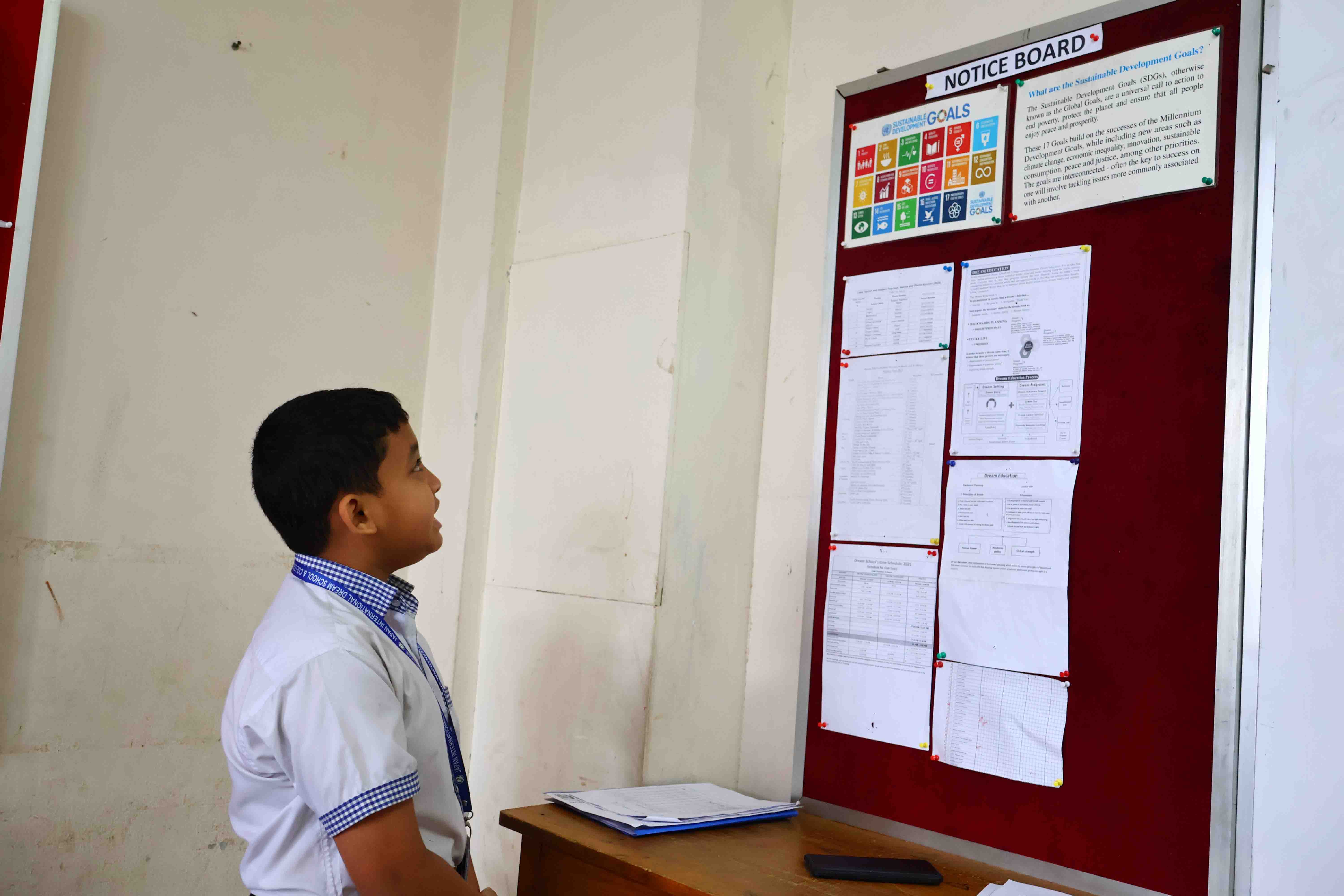
Access to clean water is critical for the health and well-being of students and staff. JIDSC is fully committed to sdg 6 by providing safe drinking water and ensuring that our school is equipped with essential sanitation facilities.
Water Filtration System for Purity and Safety:
To ensure that both students and teachers have access to clean and safe drinking water, we have installed advanced water filtration and purification systems across the school. This promotes the well-being of our entire community and aligns with sdg 6.1, which focuses on achieving universal and equitable access to safe drinking water for all.
We uphold SDG 5: Gender Equality by ensuring a safe and supportive environment for all students and teachers. Our policies and facilities are designed to promote gender equality, offering everyone the opportunity to succeed.
Separate Washrooms for Male and Female Teachers:
To ensure comfort, privacy, and respect for all staff members, separate washrooms for male and female teachers are provided. This reflects our commitment to maintaining a respectful and supportive environment, in line with sdg 5.4, which emphasizes the importance of ensuring equal participation for women in all aspects of society.
Baby Care Facility for Teachers:
Understanding the importance of family support, we provide a baby care facility for our teachers, allowing them to balance their professional and personal lives. This enables our staff members to focus on their roles while ensuring their families are cared for, contributing to sdg 5.4 and empowering women in the workplace.
Our commitment to SDG 8: Decent Work and Economic Growth extends to the well-being of our staff members, ensuring they have the resources they need to work in a supportive, safe, and sustainable environment.
Electricity and Infrastructure:
We ensure reliable electricity supply across the school premises, generator backup in case of outages. This ensures uninterrupted learning for students and continues work for staff. Our infrastructure investment ensures a comfortable and supportive learning environment for students.
Healthy and Nutritious Food for Students and Teachers:
At JIDSC, we prioritize the health of our students and staff by providing separate kitchens that prepare healthy and nutritious meals for both all students and teachers. The school cafeteria offers meals that are rich in nutrients, supporting the overall health of our community and aligning with SDG 2: Zero Hunger, which emphasizes the importance of providing healthy food to all.
We are dedicated to ensuring that every student, regardless of their background, has access to a quality education. Our facilities and services promote inclusivity, reducing inequalities within our community.
Inclusive Programs and Facilities for All Students:
at Japan International Dream School & College (JIDSC), recognized as the best college in Bangladesh, we are proud of our holistic approach to education, which integrates the Sustainable Development Goals (SDGs) into our daily practices and facilities. From Quality Education and Gender Equality to Clean Water and inclusive access, we strive to create an environment that supports both the academic and personal growth of every student and teacher.
By aligning our operations with the SDGs, we ensure that our school is a place where students are empowered, teachers are supported, and the future is shaped for a more sustainable, inclusive, and equitable society.